
business-growth
How to Start a Backflow Testing Business
Pete Volk · August 21, 2026 · 5 min read
The short answer: starting a backflow testing business comes down to five real steps — getting certified, handling the legal/insurance basics, getting properly calibrated equipment, building a customer base (often starting from your local water authority's own approved-tester list), and putting a system in place to track renewal dates before you have enough customers that a spreadsheet stops working. None of these steps require a huge upfront investment compared to most trade businesses, which is part of why it's a realistic path for someone starting solo.
Step 1: Get certified
Certification requirements vary by state and often by local water authority — there's no single national license (see our breakdown of EPA and certification requirements for why). The most widely referenced national standard is ASSE 5110, but some states layer on additional state-specific exams, and some jurisdictions administer certification through individual local utilities rather than a state board. Start by contacting your state's plumbing or health authority, or the water utility in the area you plan to work, and confirm exactly what they require before enrolling in a training course — a course that satisfies one jurisdiction won't automatically satisfy a neighboring one.
Step 2: Handle the legal and insurance basics
Business licensing, liability insurance, and bonding requirements vary by state and municipality, and specific figures weren't independently verified for any particular jurisdiction here — check with your state's business licensing office and an insurance agent familiar with trade contractors before you start taking on customers. This step is worth doing properly rather than skipping: a single incident on a commercial property without adequate coverage can be a business-ending event in a way the cost of proper insurance rarely is.
Step 3: Get calibrated equipment
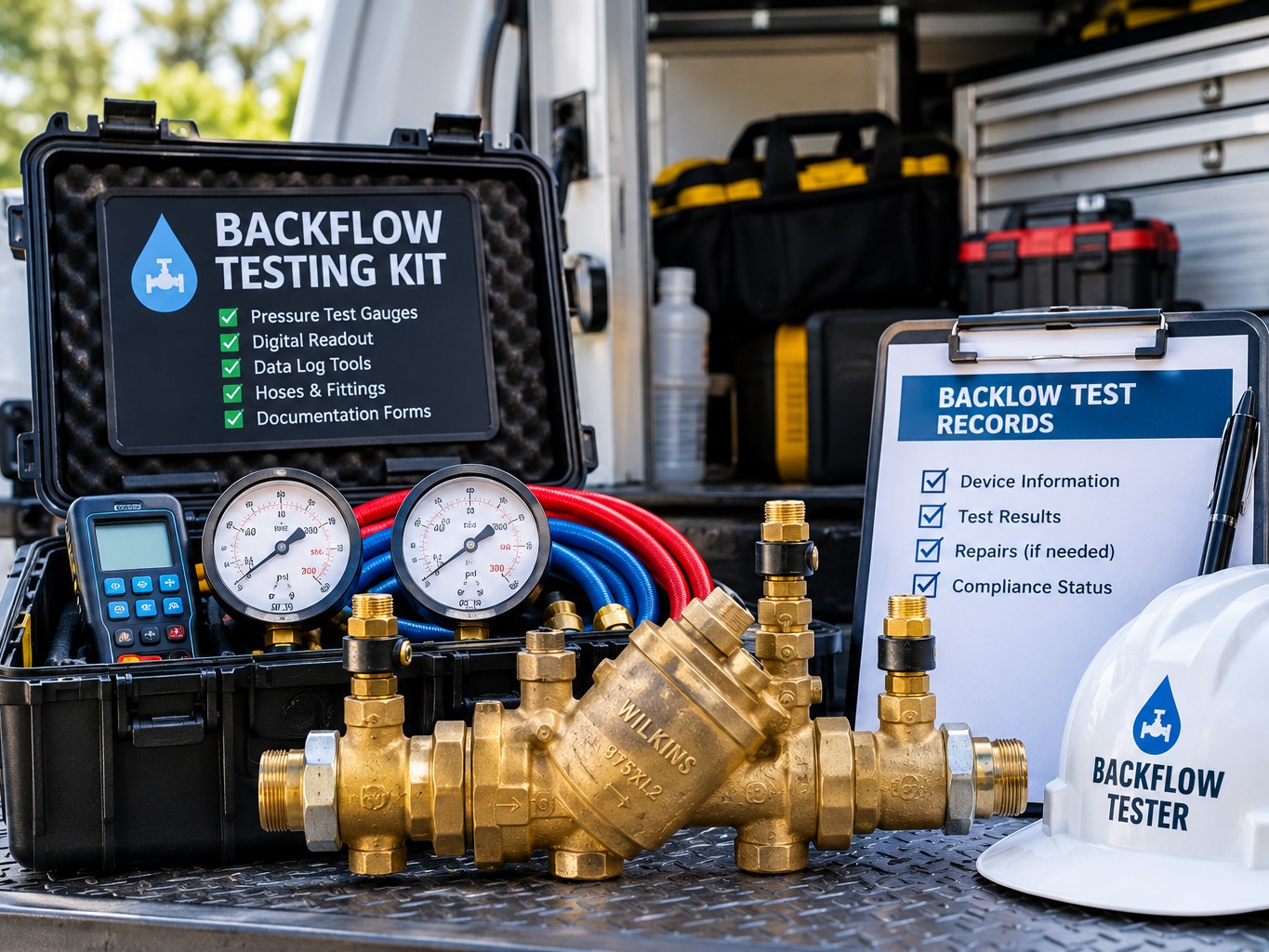
You'll need a certified backflow test kit (a differential pressure gauge), which itself typically requires periodic calibration to stay valid for official test reports — check your local water authority's specific calibration interval requirement, since this is another area that varies by jurisdiction. Compared to many trades, the core equipment list is short: a test kit, basic hand tools, and a way to generate and deliver test reports.
Step 4: Build your customer base
The most direct starting point is often your local water authority's own list of approved backflow testers — most utilities publish or maintain one, since it's part of how they administer their own cross-connection control program. Getting listed there puts you in front of property owners actively looking for a tester. From there, direct outreach to property managers, commercial building owners, and businesses with irrigation systems or fire suppression lines (both common sources of backflow devices) tends to be more effective early on than broad marketing, since this is a relationship-driven, referral-heavy trade.
Step 5: Put a tracking system in place before you need one
This is the step that's easy to skip early and expensive to skip late. A spreadsheet works fine for a handful of customers — the problem shows up once you're carrying a few hundred devices with renewal dates clustering into the same seasonal window, and a missed renewal means a customer who's now out of compliance because nobody reminded them in time. That's not a hypothetical risk in this trade — it's the single most common complaint in public reviews of the software category (see our breakdown of what Syncta users actually say). Whatever system you use, the two things worth checking it actually does: send renewal reminders automatically (not just store the date) and make it easy to bring in your existing customer list — including from an existing spreadsheet — without days of manual re-entry.
Frequently asked questions
What certification do I need to start testing backflow devices? It depends on your state and often your local water authority — there's no single national requirement. ASSE 5110 is the most widely referenced standard, but confirm the specific requirement with your state and the water authorities you plan to work under before enrolling in training.
How do I find my first customers? Most water authorities maintain a list of approved backflow testers that property owners reference directly — getting listed there is usually the most direct path to early customers, alongside direct outreach to commercial property managers and businesses with irrigation or fire suppression systems.
Do I need special software to start, or is a spreadsheet enough? A spreadsheet is fine at a very small scale. The risk grows as your device count grows and renewals cluster seasonally — a missed renewal because nobody was reminded in time is a real, common failure mode in this business, and it's worth having a system that sends reminders automatically before you're managing enough devices for that to become likely.
Sources: Certification and regulatory framing per our EPA cross-connection control breakdown (EPA and Backflow Authority sourced there). Software/reminder failure-mode claim per our Syncta reviews breakdown (Capterra-sourced). State-specific licensing, insurance, and calibration requirements were not independently verified for any particular jurisdiction — confirm directly with your local authorities.
Ready to stop losing renewals?
We're taking founding customers now — locked-in pricing and a direct line to the person building it.
Get Early AccessMore from the blog
business-growth
How Many Devices Can One Tester Manage Profitably?
A working framework for estimating how many backflow devices a solo tester or small crew can realistically and profitably manage, and the levers that move the number most.
regulatory
EPA Cross-Connection Control Requirements, Explained
What the EPA actually says about cross-connection control and backflow prevention — and why the real rules you follow come from your state and local water authority, not a single federal standard.
syncta
How to Export Your Data From Syncta (Step-by-Step)
A practical guide to getting your customer and device data out of Syncta and into a new system — including exactly how CrossConnectHub's import wizard handles a Syncta-style export.